

Tenure: 1285 – 1294
Aradhana: Pushya krishna saptami
Location: Hampi
Charama Shloka :
ಭೂದೇವೀತನಯಾಸಕ್ತರಘ್ವೇಶಪದಮಾನಸಃ | ನೃಹರ್ಯಾಖ್ಯಗುರುರ್ಭೂಯಾದಸ್ಮದಿಷ್ಟಾರ್ಥ ಸಿದ್ಧಯೇ||
भूदेवीतनयासक्तरघ्वेशपदमानसः | नृहर्याख्यगुरुर्भूयादस्मदिष्टार्थ सिद्धये ||
bhūdevītanayāsaktaraghveśapadamānasaḥ | nṛharyākhyagururbhūyādasmadiṣṭārtha siddhaye||
About Sri Narahari Tirtha
Sri Narahari Tirtha was ordained the 3rd Pithadhipati by Sri Padmanabha Tirtharu. He was a direct Sishya of Acharya Madhva. The saint’s Purvashrama Nama is mentioned to be Syama Sastri and is said to have hailed from Chikakolu town in Ganjam district. His ancestors seem to have been aristocrats in the Gajapati empire based out of the current Odisha state. Available epigraphical evidence suggests that kings of the eastern Ganga dynasty were assisted by the saint for three decades, indicating he was already ordained into the fourth order by Acharya Madhva then. The fact that the saint was commanded by Acharya to assist the empire even after ordination clearly indicates Acharya’s foresightedness and his care for the welfare of humanity as per his own dictum “Nana Jana Shushrusha Karmakhya Karavanmite.”
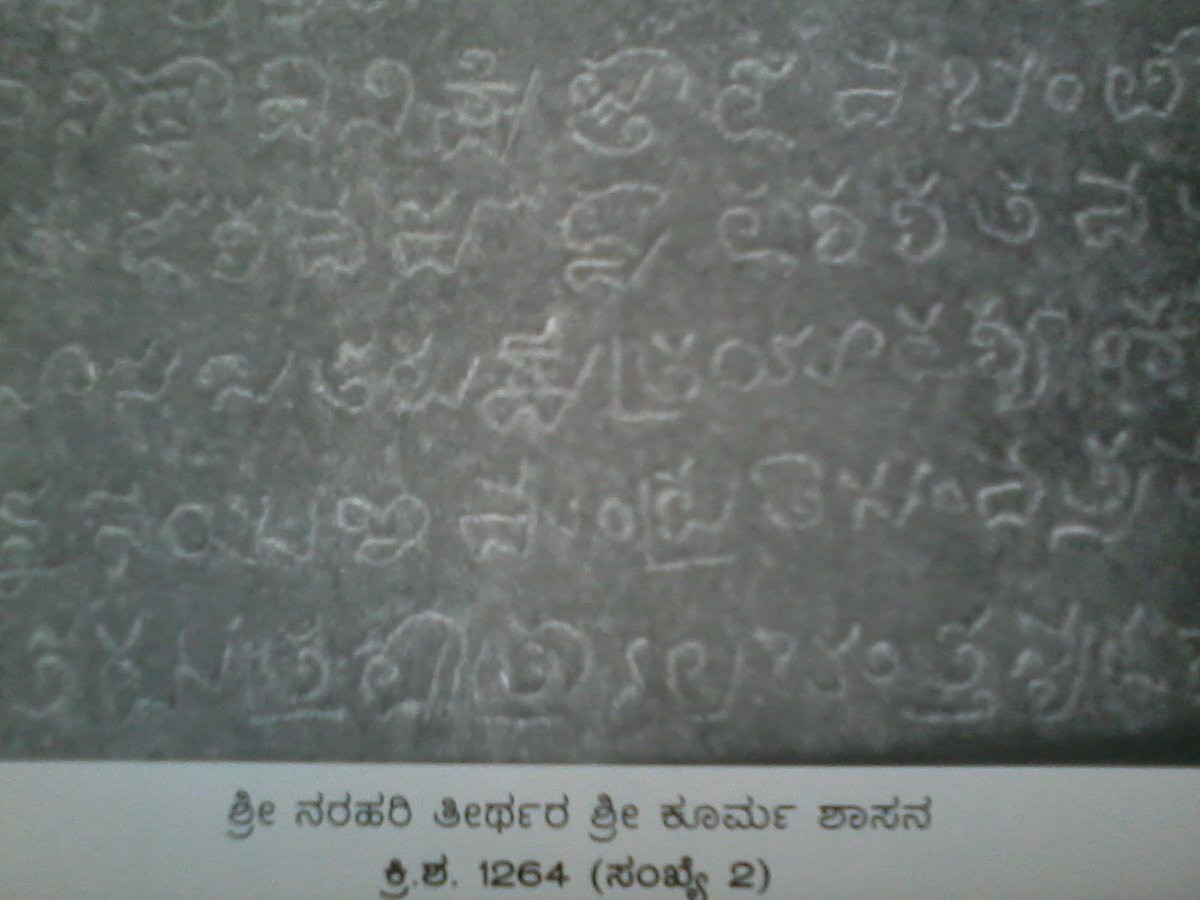
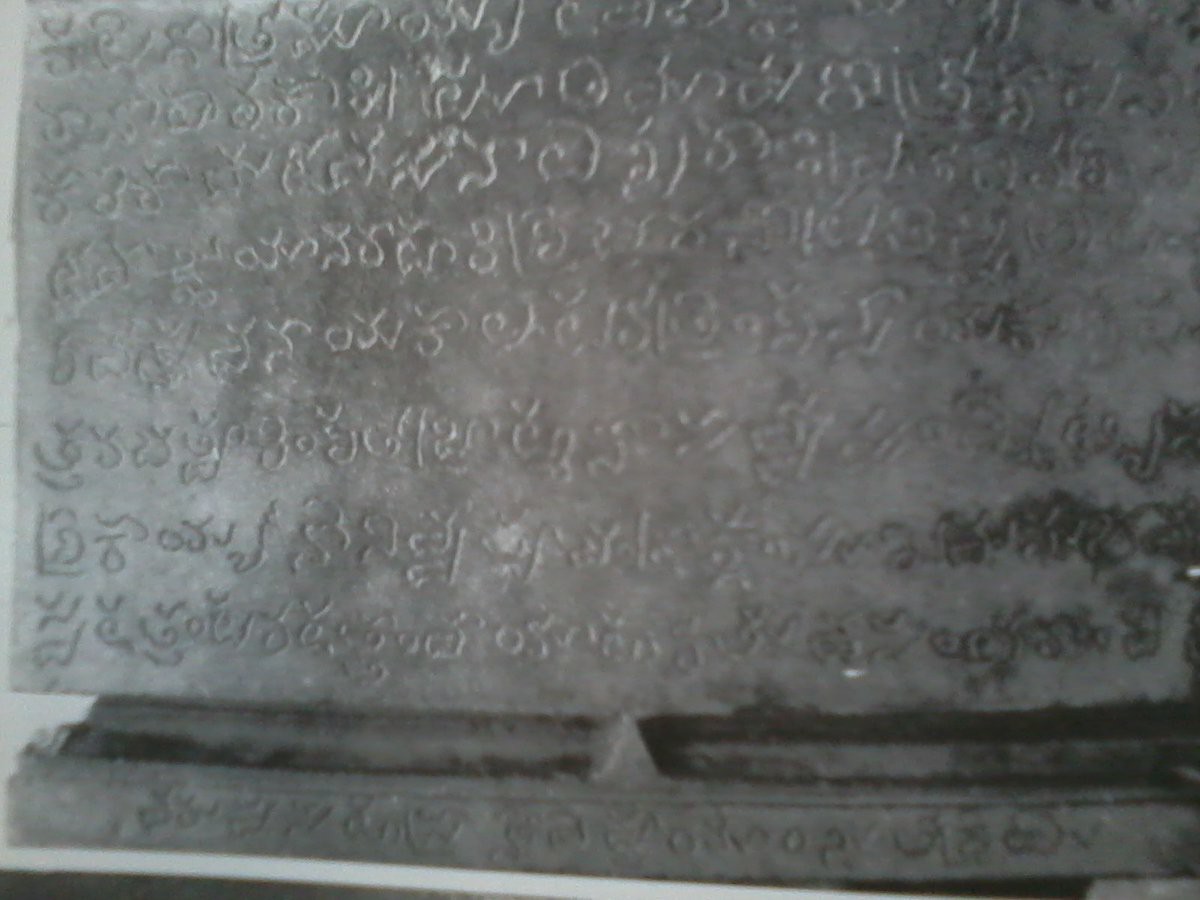
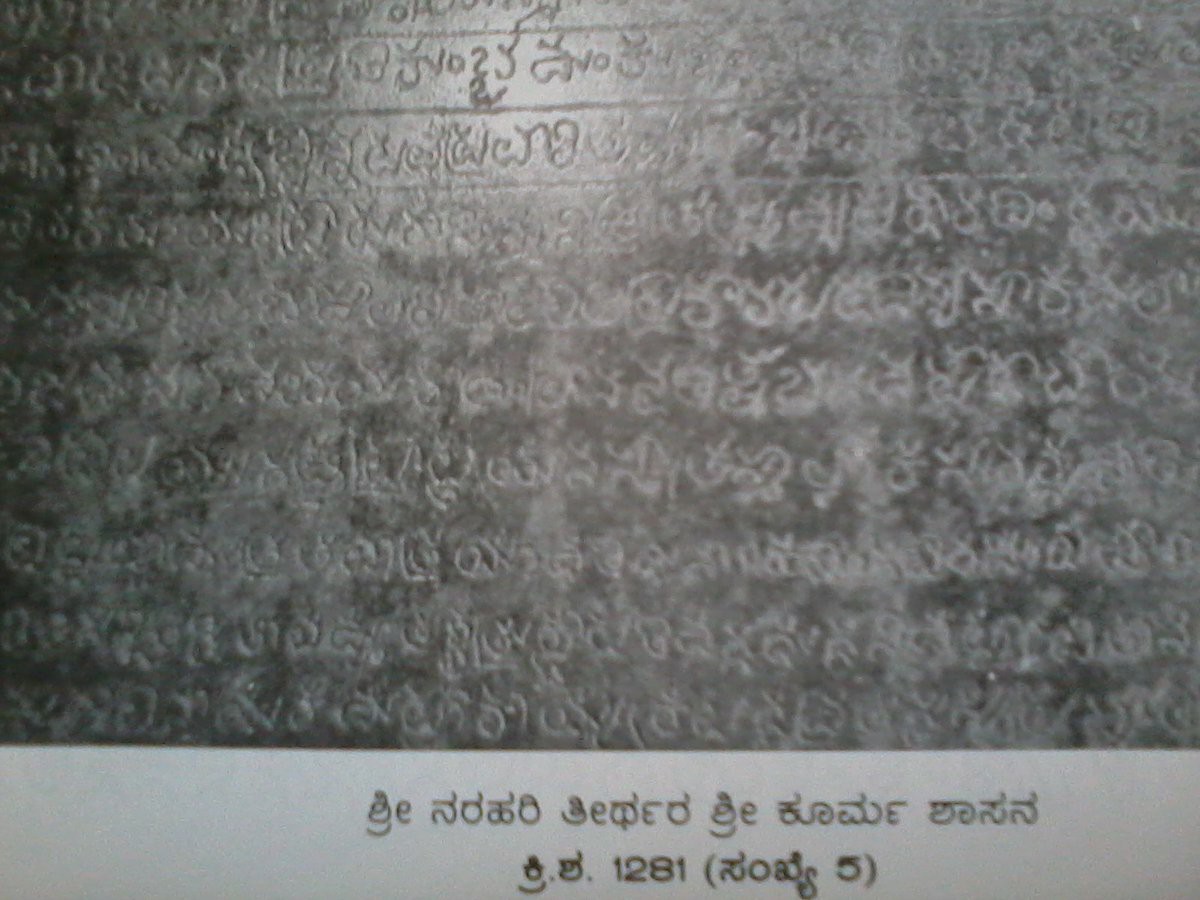
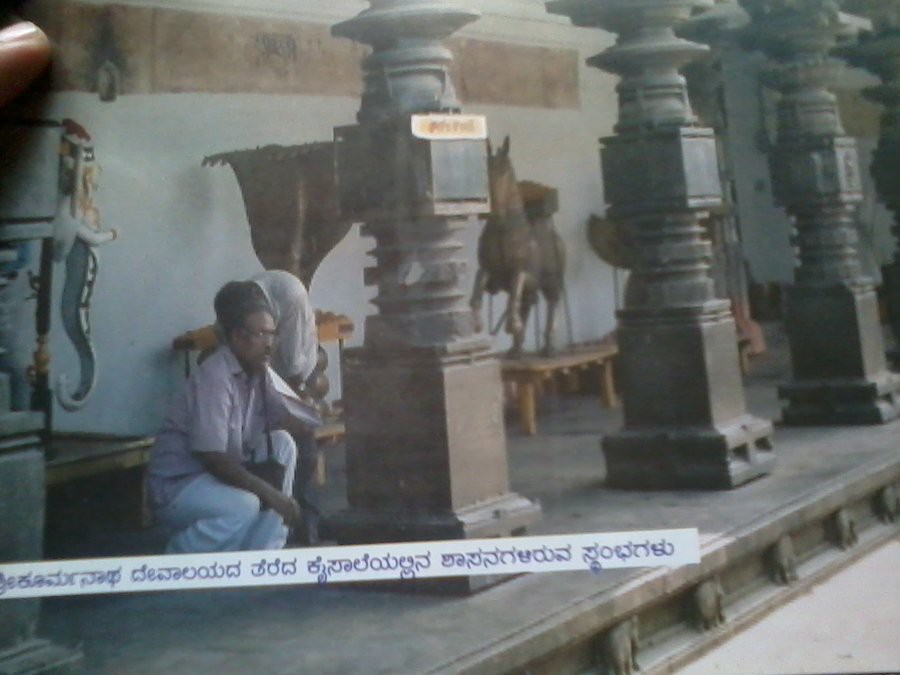
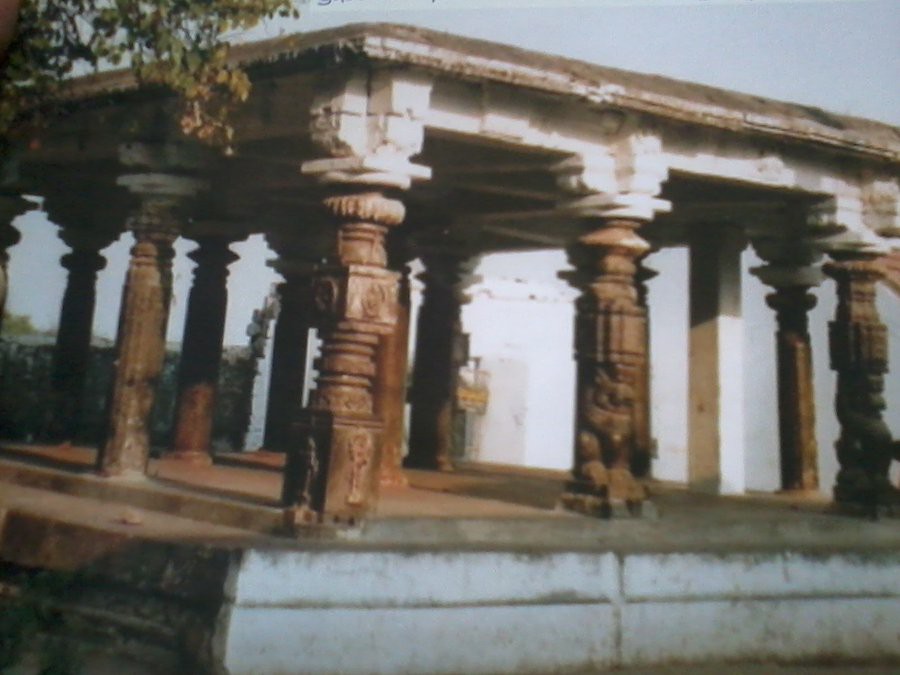
The saint was a multi-faceted personality: aristocrat in the administrative realm, intellectual in the philosophical realm, and a poet in the devotional realm. His contributions on each of these fronts speak for themselves. Being an aristocrat, the saint ensured that the king followed Sanatana Dharma scrupulously and took care of its adherents by formulating a proper executive system to oversee temple administration. His contributions on this front are well documented in inscriptions available in Simhachalam and Srikurmam temples. Some adjectives being used about the personality of this saint are: Loka Surakshana Ati Nipunah, Yo Avati Kalinga Bhu Sambhavan.
Though Saint Ramanuja had introduced Vaishnavism two centuries earlier, Sri Narahari Tirtha’s prolonged presence resulted in Acharya’s Vaishnavism getting a firm following in this region, however in a completely non-interfering and secular manner. It is unfortunate that there doesn’t exist a lineage of his disciplinistic succession, as we have for the other three direct disciples now, while there still exists a sizable population of adherents.
On the intellectual front, tradition records that the saint, being a Pracheena Tikakara, composed commentaries for several of Acharya Madhva’s works out of which only four are available today: Bhavaprakashika on Gita Bhashya, expositions (Tika) on Yamaka Bharata, Vishnu Tattva Nirnaya and Karma Nirnaya.
On the devotional front, tradition records the saint as the first one to have composed Devaranamas in Kannada. Further, we also understand that the saint was instrumental in propagating two more art forms: Yakshagana Bayalata which is a form of dance-drama famous in and around coastal Karnataka. It has as its theme stories of the Lord and His devotees as recounted in our sacred epics, and the classical dance form that evolved in Andhra Pradesh famous as Kuchipudi today.
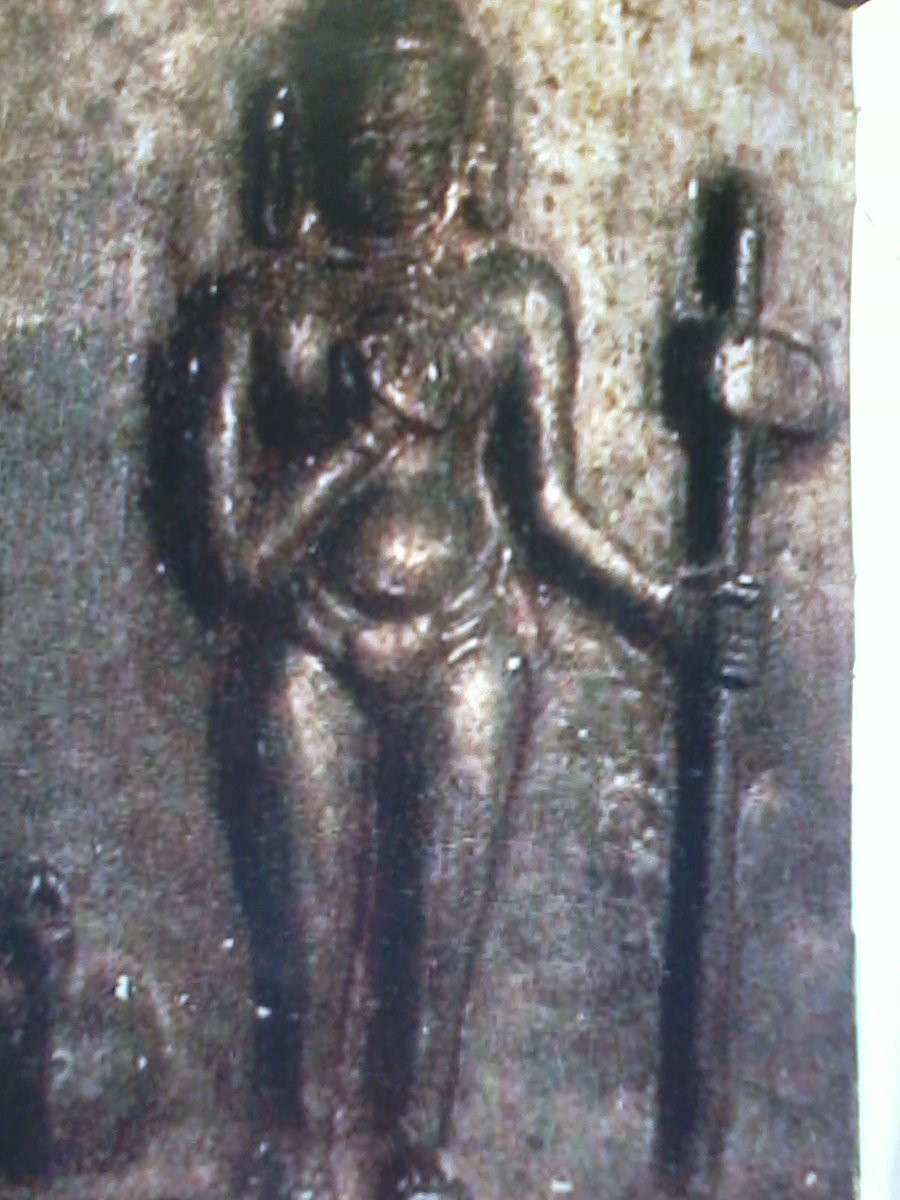
The last and most important task accomplished by the saint as he left Kalinga Desa was acquiring the idols of Sri Mula Rama and Mula Sita Devi – sa Sita Mula Ramarcha worshipped by Chaturmukha Brahma and housed in the treasury of the Gajapati kings for eons, Kose Gajapateh Sthita, back to Acharya Madhva for tutelary worship.
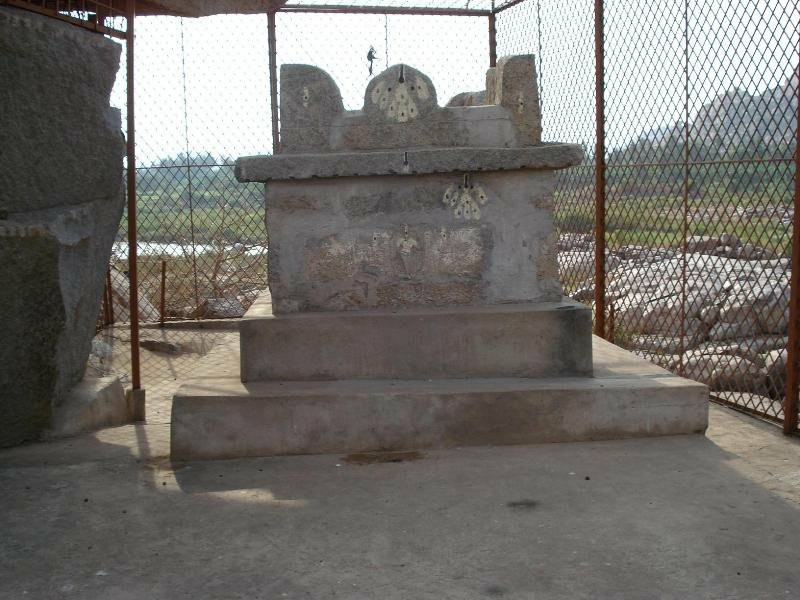
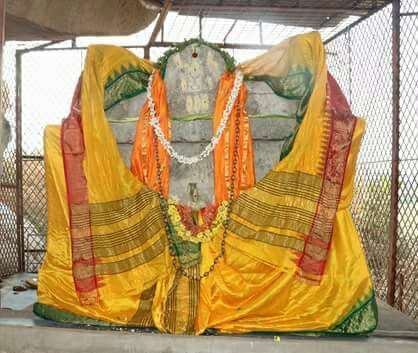
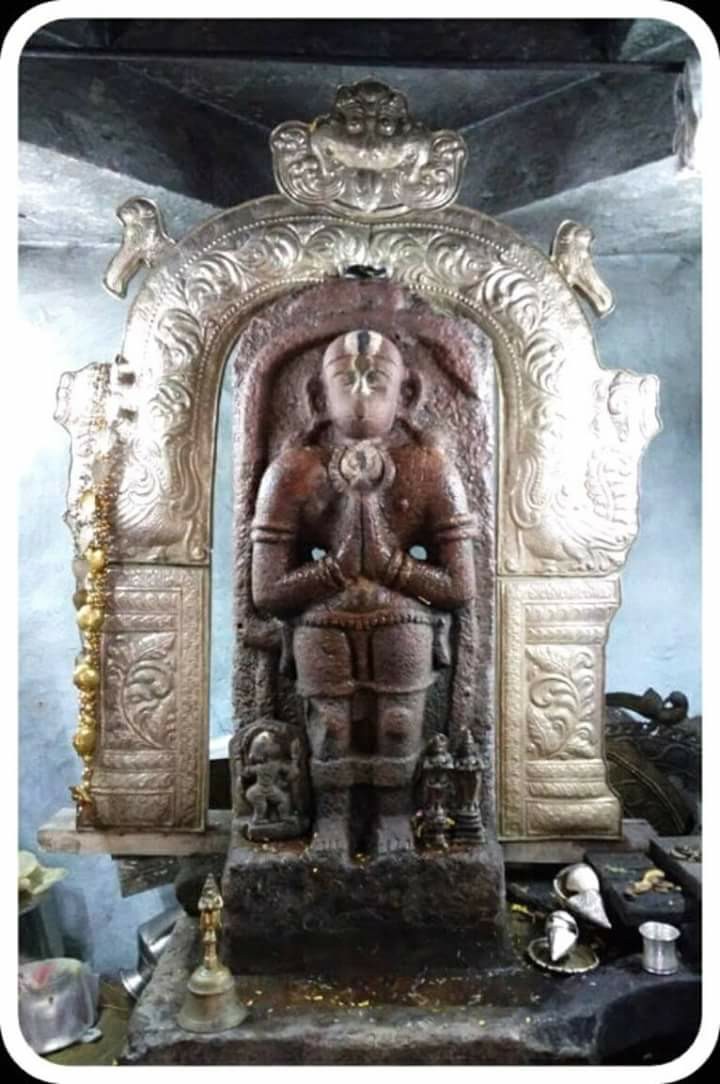
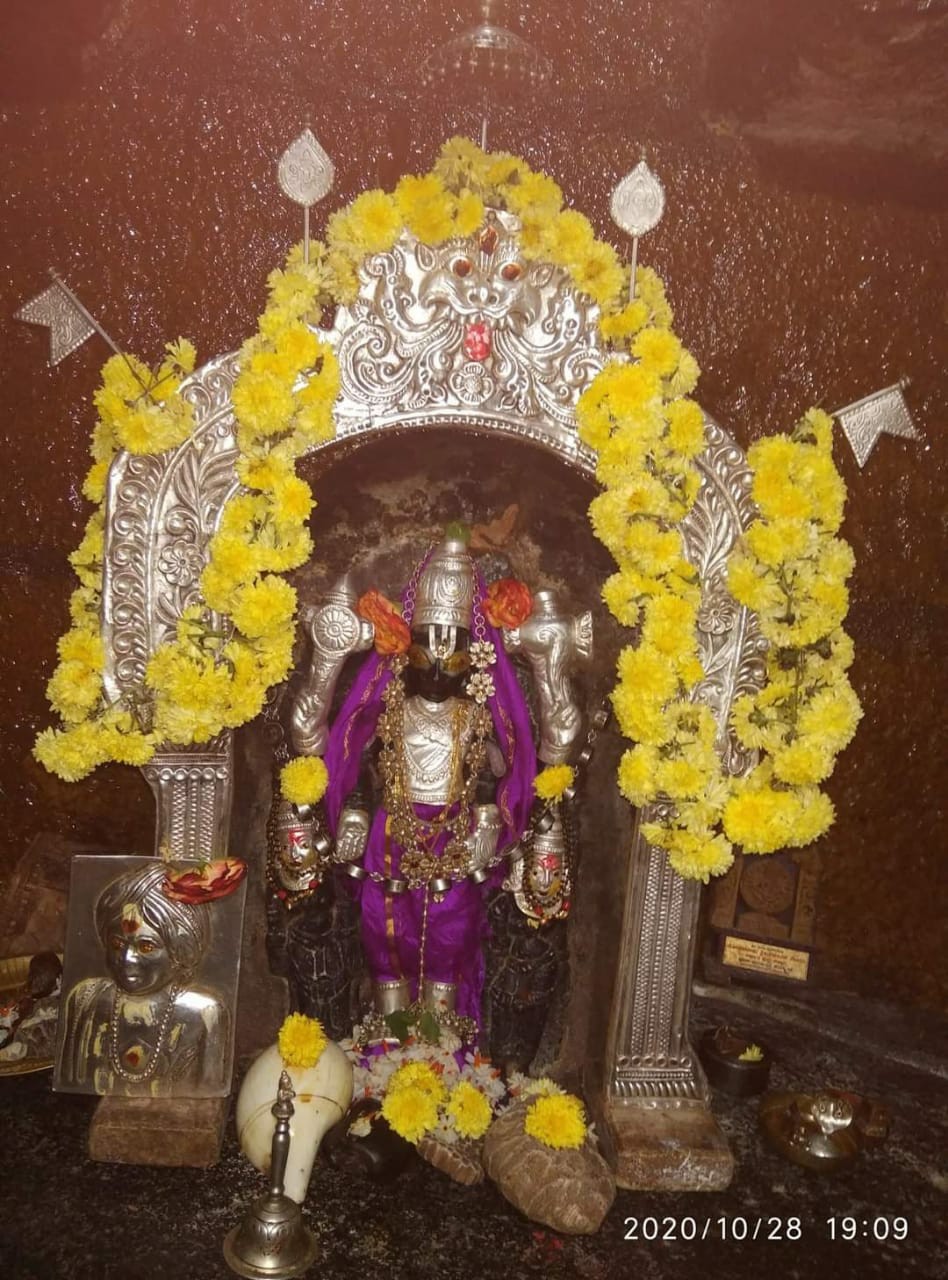
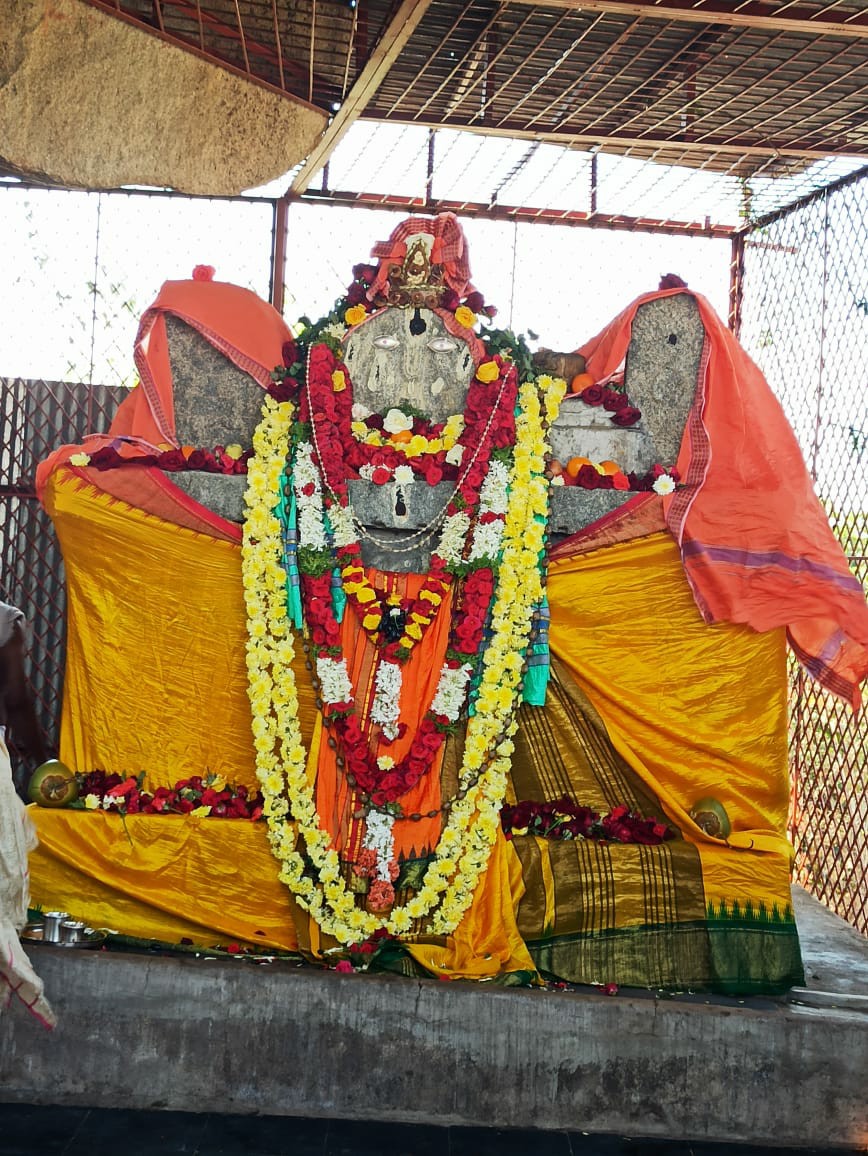
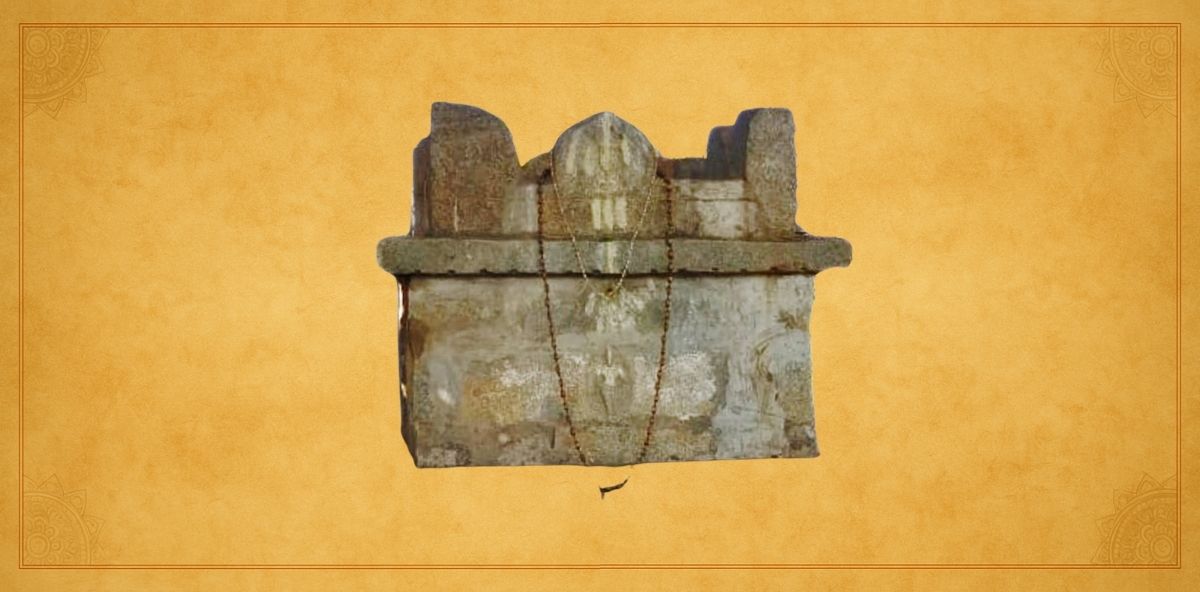
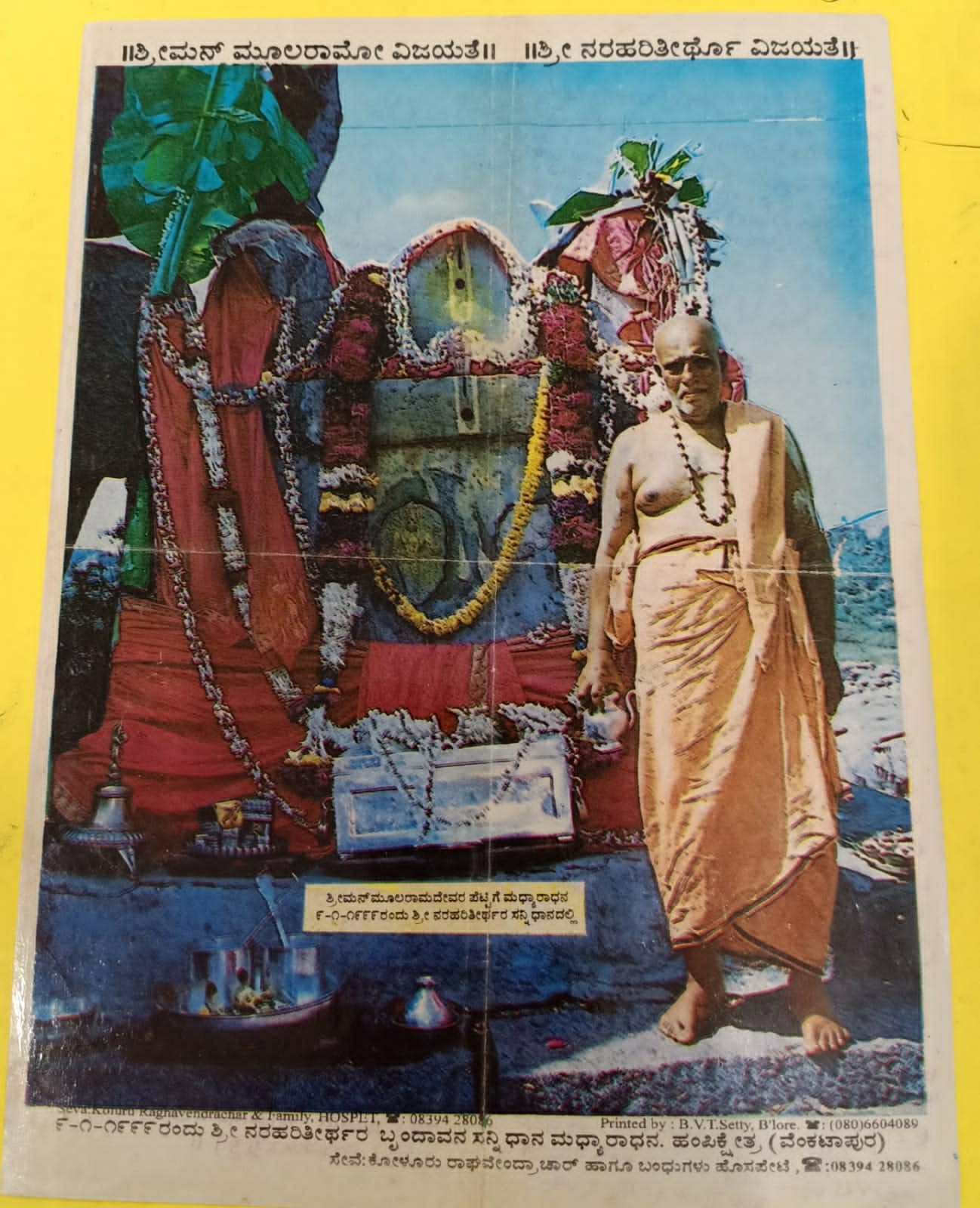
Having accomplished this mission, the saint continued his adhyayana with Acharya Madhva in Udupi, at which time he perhaps completed his commentaries on Acharya’s works. Shortly after, the saint ordained Sri Madhava Tirtha as his successor to the Pitha since he had already been inducted into the fourth order by Acharya Madhva and attained Haripada. His Vrindavana was consecrated near the rock adjacent to Chakra Tirtha at Hampi on the bank of river Tungabhadra.
Gallery
Warning: Undefined variable $index in /home/vyasarajamatha/public_html/parampara-details.php on line 222