

Tenure: 1320 – 1342
Aradhana: Ashadha Krishna Panchami
Location: N/A
Charama Shloka :
ಚಿತ್ರೈಃ ಪದೈಶ್ಚ ಗಂಭೀರೈರ್ವಾಕ್ಯೈರ್ಮಾನೈರಖಂಡಿತೈಃ | ಗುರುಭಾವಂ ವ್ಯಂಜಯಂತೀ ಭಾತಿ ಶ್ರೀಜಯತೀರ್ಥವಾಕ್ ||
चित्रैः पदैश्च गंभीरैर्वाक्यैर्मानैरखंडितैः | गुरुभावं व्यंजयंती भाति श्रीजयतीर्थवाक् ||
citraiḥ padaiśca gambhīrairvākyairmānairakhaṇḍitaiḥ | gurubhāvaṃ vyañjayantī bhāti śrījayatīrthavāk ||
About Sri Jaya Tirtha
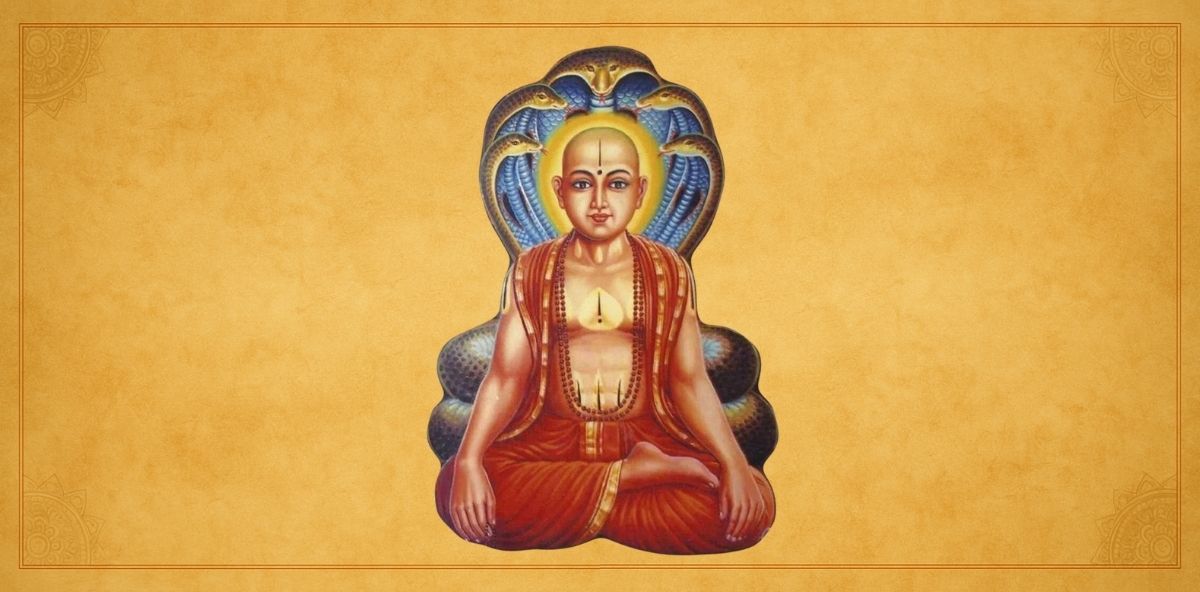
Sri Jayatirtha was ordained the 6th Pithadhipati by Sri Akshobhya Tirtha. He hailed from the Deshpande family of the Shastika Vamsha.
Once Acharya Madhva observed Chaturmasya in a village called Aravattokkulu in Kodagu district. At that time, the great families of the village prayed to Acharya to be accepted as his disciples and be given Vaishnava Diksha. Acharya Madhva told them that Vaishnava Diksha can be granted only to those who believe in Vaishnava Dharma and are devoted to it. He asked them to perform Seva. During the entire Chaturmasya, the members of the families performed Seva. Acharya Madhva, having observed their Vishnu Bhakti and sincere Seva, granted Vaishnava Diksha to members of the Shastika Vamsha by administering Tapta Mudras. The members of this family were ministers and Senadhipatis in many kingdoms in Karnataka, Andhra Pradesh, and Tamil Nadu, even till recent times (before independence).
History has shown that members of the Shastika Vamsha have been devout Madhva Siddhanta followers. The luminaries of this lineage are Sri Jayatirtha, Sri Rajendra Tirtha, Sri Jayadhvaja Tirtha, Sri Brahmanya Tirtha, Sri Vyasaraja, Sri Vijayindra Tirtha among others. The specialty of this family is that they were well-versed in both Shastra Vidya and Shastra Vidya. Sri Vyasaraja has written a special Mangalashtaka for Shastika Vamsha.
The Purvashrama Nama of Sri Jayatirtha is Sri Raghunatha Dhondopant. Sri Akshobhya Tirtha ordained Sri Raghunatha into Sanyasashrama as Sri Jayatirtha. Sri Jayatirtha completed his entire Adhyatmic studies directly under Sri Akshobhya Tirtha. It is believed he was an Avatara of Devendra. It is also believed that the main purpose of the Avatara was to write commentaries on the works of Acharya Madhva.
Prior to Sri Jayatirtha, the Pracheena Tikakaras including Sri Padmanabha Tirtha, Sri Narahari Tirtha, Trivikrama Pandita, and others wrote Vyakhyanas to counter the objections from other Siddhantas and to express in detail the essence of Madhva Siddhanta. However, after the times of the Pracheena Tikakaras, new objections were raised by followers of other Siddhantas. Sri Jayatirtha took upon himself the responsibility not only to clearly counter all such objections, but also to provide utmost clarity to Madhva Siddhanta. He wrote Vyakhyana (commentaries) on eighteen Granthas of Srimadacharya. This is an extraordinary and unmatched feat. For most, it is impossible to read all of them and understand, but Sri Jayatirtha wrote detailed commentaries, which has enabled all future generations to understand Tattvavada better. It is possible only because of Sri Jayatirtha’s great blessings to us through these commentaries.
All of his works are written in such a way that anyone who studies them will neither have any doubts nor objections on Srimadacharya’s Siddhanta. It is incredible that since the last eight centuries, not even the smallest of objections—either in grammar, language, syntax or philosophical substance—has been found either by followers or opposers of Madhva Siddhanta. Such is the greatness of Sri Jayatirtha’s works. Through his commentaries, Sarvamula Granthas have become more accessible. The depth of philosophical teachings by Srimadacharya in Sarvamula Granthas would have been impossible to gauge and understand for many without this great Karunya and Anugraha of Sri Jayatirtha.
Among Sri Jayatirtha’s works, the Grantha at the pinnacle is Srimannyaya Sudha. It is a commentary on Srimadacharya’s Anuvyakhyana, which is a detailed exposition on Brahma Sutra. This is considered the encyclopedia of Madhva Siddhanta. Though popularly known as Srimannyaya Sudha, the actual name of the Grantha is Vishamapada Vakyartha Vivriti. Nyaya Sudha, the nectar of Madhva Siddhanta, is highly respected among all scholars of Indian philosophy and commentators. The importance of Nyaya Sudha can be understood by another saying: Sudhava Pathaniya Vasudhava Palaniya — studying Nyaya Sudha is like ruling the earth (being a king).
Besides this exemplary work that provides crystal-clear clarity of Madhva Siddhanta, Sri Jayatirtha has written commentaries on Sarvamula Granthas of Acharya Madhva. Commentaries on Rig Bhashya, Dasha Prakarana, Tattvasankhyana, Vishnutattvanirnaya, etc., totaling to eighteen commentaries. For the remaining Sarvamula Granthas, Sri Jayatirtha has given guidelines and instructions for understanding the real essence of Madhva Siddhanta. For having written extensive commentaries, Tikas, he is also revered as Sri Tikarayaru or Sri Tikakritpadaru.
He has written three independent Granthas: Pramana Paddhati, Vadavali, and Padyamala. Pramana Paddhati is based on Pramana Lakshana Grantha of Sri Madhvacharya. Vadavali is a collection of arguments made by Acharya Madhva in support of Dvaita Siddhanta and critiques of misinterpretations of Vedanta by other schools of philosophy. Nyayamruta, one of the Vyasa Traya Granthas, finds its basis in Vadavali. In Tantrasara Sangraha Grantha, part of Sarvamula Granthas, Acharya Madhva briefly wrote about Vishnu Puja Paddhati and Krama. On the basis of that, Sri Jayatirtha wrote Padyamala, which is the gold standard reference text for Puja Paddhati today. Padyamala is a detailed description of the puja, complete with the Shodasha Upachara instructions for Tantrasara Puja Paddhati. He is supposed to have written all the twenty-one works in Yaragola cave.
He also travelled extensively including Srirangam and Udupi. During his Sanchara he won many debates against followers of other Siddhantas.
His other great service to the Madhva community is Adhyapana of Shastras to Rajadeva and Jayadeva who were his Purvashrama nephews. Both of them adorned the Pitha of Srimatha, as Rajendra Tirtha and Jayadhvaja Tirtha respectively. Later Rajadeva and Jayadeva completed their further studies under Sri Bhimacharya who also adorned the Pitha as Sri Vidyadhiraja Tirtha. Sri Jayatirtha initiated Sri Bhimacharya into Sanyasashrama as Sri Vidyadhiraja Tirtha. Sri Jayatirtha handed over all the Samsthana Pratimas including Lakshmi Sameta Mula Gopalakrishna, Pattabhi Rama, Vyasa Mushti, and Sri Sita Sameta Mula Rama Devaru to Sri Vidyadhiraja Tirtha. He also made a Yoga Pattika Lakshminarasimha Devaru, and handed it over to Sri Vidyadhiraja Tirtha.
He then did Vrindavana Pravesha, witnessed by many scholars. Yenastapica Madhva Shastra Vijaya Sthambo Dharamandale Sevetam Jayatirtha Veera Munisham — meaning, the one by whom the Vijaya Stambha (victory flag) of Madhva Shastra has been eternally installed on this planet. There is no scholar who does not glorify Sri Jayatirtha. Such is his greatness.
To understand the impact of Sri Jayatirtha’s life on the Madhva Siddhanta, it is illustrative to see how the great Sri Vyasarajaru glorifies him.
The Carama Shloka chanted every day in the Srimatha is from Nyayamruta:
Citraih Padaishcha Gambhiraih Vakairmanairakhanditaih |
Gurubhavama Vyajnayanti Bhati Sri Jayatirthavak ||
Another shloka by Sri Vyasarajaru glorifying Sri Jayatirtharu is from Tatparya Chandrika:
Mithya Siddhanta Durdvanta Vidvamsana Vicakshanah |
Jayatirthakhya Tarani Bhāsatam No Hridambare ||
“Let the Sun-like Jayatirtha enlighten our hearts by defeating the darkness of Mithya Siddhanta.”
The other shloka by Sri Vyasarajaru that summarizes the greatness of Sri Jayatirtharu is:
Anandatirthopadishto Nidhinarayanahvayah |
Pradarshito Yena Samyak Jayatirtham Tamashraye ||
“We seek refuge in Jayatirtha to clearly see the treasure of knowledge of Narayana given to us by Acharya Madhva.”